Field Work – In the Field
by Stephanie Olsen
First published in Issue Two of Bluff & Vine: A Literary Review in 2018
I was a hoer for $2.50 an hour. Try saying that in a job interview! I was also a puller, sorter, and setter, besides being a hoer – sometimes for less than that astronomical wage.
Like many of my friends, in the 60’s and 70’s I did farm work to make money. I did it to get the cash to buy clothes and Ambush cologne. I spent one day picking berries before I gave up, and spent an Easter vacation tying grapes to save up for a trip to Boston. My main occupation had to do with cabbage, though, which was widely grown in Benton, where I grew up.
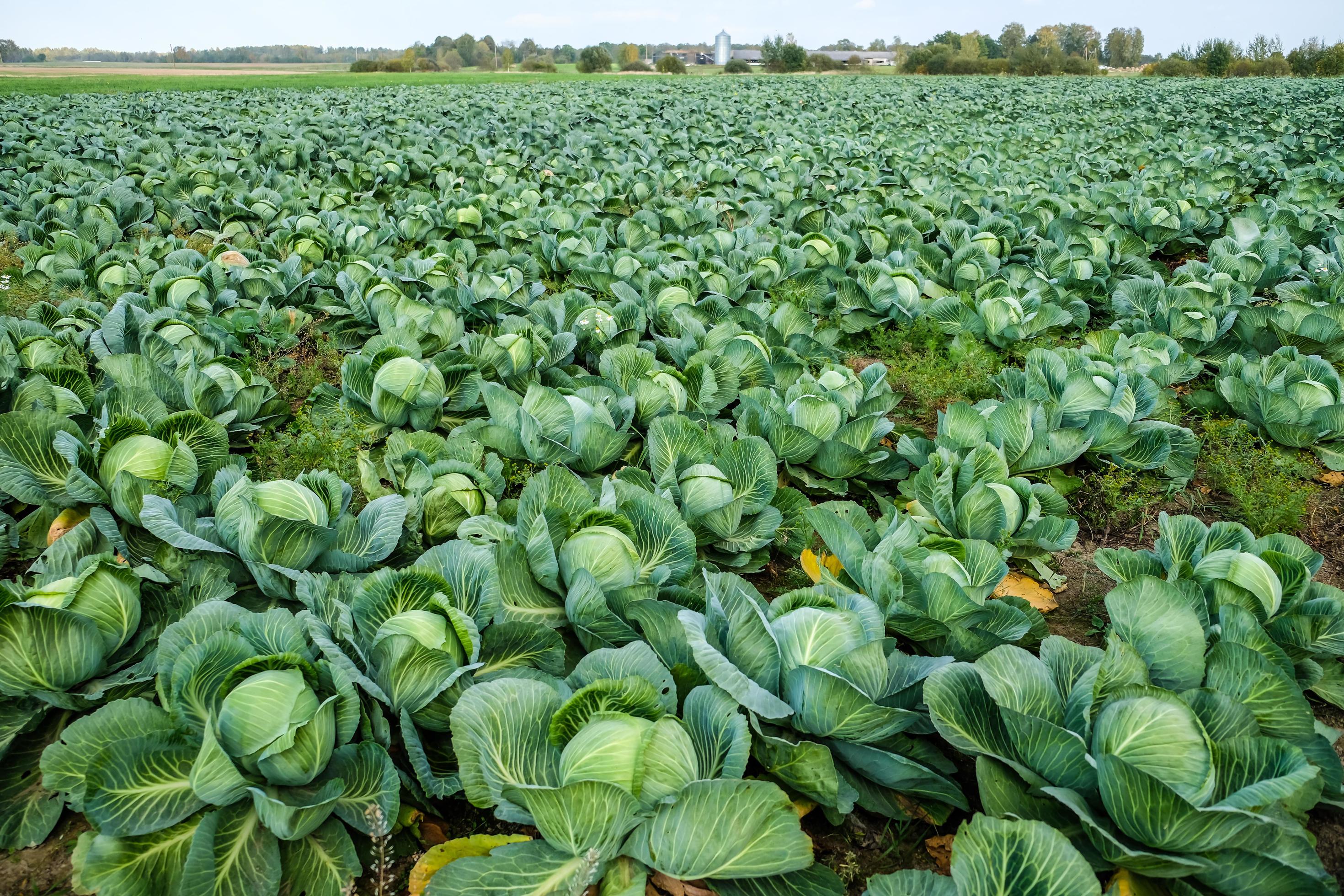
Back then, raising cabbage was labor-intensive. Farmers planted the cabbage seeds in sandy soil. When the plants were tall enough to transplant, they were pulled out of the soil, gently, by hand, and placed on burlap sacks that were cut open. The burlap sacks were rolled up and loaded on a truck to be transported to the sorting barn. There the sacks would be unrolled on long tables, and the people around the table, known as sorters, would grab a bunch of plants and remove weeds, sick-looking specimens, and any plant with a double heart. We also looked for clubroot, a plant disease that could spread quickly and ruin a whole field. The plants that passed muster were carefully put into wooden crates, roots toward the bottom of the crates. These, in turn, would be transported to the field, where the plants would be planted, or, as we said, “set.”
My first summer I did all three jobs for a farmer named Mel Baker. Along with three other teenage giggly girls, I did the absolutely back-breaking job of pulling plants, then sorted them (BORing), and finally planted them on a four-seater planter. The second summer, and for a few summers thereafter, I worked for Ejner Christensen, who had a big enough spread that there were cabbage specialists: one team for pulling (that did not include women!), one team for sorting, and eight of us for setting.
We setters were often called in to sort, especially when the weather was too bad to be in the fields. Teenagers were in the minority – most of the sorters were middle-aged (at least I thought so then) women with names that ended in –sen. Ejner’s farm lay in the middle of Dane Country – Benton had a huge (proportionally) Danish-American population and there was a particularly Danish feature of the sorting barn. Sorting started around eight AM, and promptly at 10, the sorting table would be cleared of plants and the worst of the dirt, and placemats would come out of picnic baskets, as well as coffee cups, thermoses and Danish pastries. There, among the rather odiferous cabbage plants, discarded weeds, and women sometimes wearing rollers in their hair, appeared a dansk kaffebord. If it had been in Denmark, there would have been small candles lit to mark the work-break, but that’s another story. As soon as the last crumb and last slurp of strong black coffee had been enjoyed, the picnic baskets were refilled and tucked away, and the cabbage plants became the focus of attention until lunch.
Ejner had an eight-seater planter, mostly filled with girls, but also the occasional hired hand pressed into service if there was an empty seat. The senior member of our crew, though, was the irrepressible Jens “High-Flyer” Pedersen, an octogenarian fellow who was born and raised in a part of Denmark that half of the Town of Benton had ancestors from, a white-haired, tanned, Paul-Newman-blue-eyed, slim man who spoke with a very strong Danish accent – and he spoke a dialect that most Danes wouldn’t understand now.
Despite his age, Jens was very lively. He was my setting partner, which meant that we had a wheel between us, with paddles that opened as they came toward us. Alternately, Jens and I would put a plant into the paddle, and the paddle would close, and move toward the ground, where the plant would be, well, planted. Jens used his right hand to situate the plant, I used my left (I thought left handed setters might be in more demand than right-handed setters). Jens was on the far left side of the planter, as befitted his age – he didn’t have to clamber so far to get on and off the thing.
Here was the problem. Jens was a great setting partner – he told stories about teaching his landlady naughty Danish words, told me about growing up in Denmark, taught me how to count to ten in his dialect – but he chewed tobacco, and he spat tobacco juice away from the setter. However, there was often a breeze toward me, and that’s where the juice often landed. I guess I did not mention that the costume of choice for the women was a halter top and short shorts. So when Jens let go, it ended up on my bare thigh. There I would be, frantically trying to use a cabbage leaf to wipe off tobacco juice from my thigh, while attempting not to miss filling a paddle – farmers don’t like gaps in their rows.
We had a wonderful time on that setter – we sang, told jokes, told stories, threw cabbage plants at the driver of the tractor, who was the patient and funny Ruppert Jensen. He, like Ejner, was related to about half the people on the setter. We tried to make him go faster so we could challenge ourselves. We had contests, too, to see who could plant the most cabbages in a row – leaving our partner to sit by passively.
There were trays in front of each of us, piled full of cabbage plants at the beginning of any row, and we had to grab a handful in one hand and then feed the plants into the paddles with the other. We all tried to fill up our trays fairly equally, but one of us (or more) would run short of plants before the others. We would yell: “I need plants!!” and then people would scramble to grab some of the plants in front of them and then send them over to whoever was in need – that was great fun.
Not so great fun was setting after the plants had been sitting around in the barn for a couple of days – maybe over a Sunday or because of bad weather. The plants were stinky and slimy and we had to figure out as we were setting which ones were likely to survive, and which should just be tossed out.
In any case, we would end the day either when we ran out of plants or a thunderstorm would make it too dangerous to be in the middle of the field. We would run to our cars screaming and drive home, usually on seats covered by towels, because we knew ahead of time that a day in the cabbage field would make us mud- and dust-covered, with slimy green spots on our clothing. I think we were stinky, too!
Cabbage setting was fun despite the heat, dust, slime, and tobacco juice, and the money was good for farm work – at least we were paid by the hour, and not by the cabbage! Within a few years, many local farmers had moved away from planting cabbage, then transplanting it. The trend was to direct seed then – farmers planted the cabbage as seeds, close together, and then the hard work was blocking the cabbage later, hoeing out a row so that the cabbage plants were 18-24 inches apart.
Many of us cabbage setters became hoers. We started early in the morning, 8 or 10 of us, walking up a row each, sharpened hoes at the ready, removing the unwanted excess cabbage plants, AND removing all weeds, as well. For me, this happened on fields just down the road from Ejner’s farm, on his brother, Art Christensen’s farm.
We loaded up on bug spray and sometimes sun lotion (usually to enhance our tans, not prevent them!), and wore sneakers so we wouldn’t cut our toes open on the sharp hoes. We gossiped, sang old 4-H songs, laughed, and helped each other.
That is what I remember about hoeing the most: we were a hoeing unit, not just individuals. If one of us had a really weedy row to hoe (sometimes the weed-killer spigot in the planter got plugged up so just one row could be really bad), we would yell to the others that we needed help. A cluster of hoers would gather to attack the clumps of redroot and other unwelcome vegetation. When that stretch of row was done, everyone would go back to her own row, ending up at the other end of the field. And we never, ever rested before everyone else had completed her row. You finished ahead of everyone else? You picked the row where the woman was farthest behind the others, and you started at the end and hoed right up to her. Everybody worked together. And at the end of the rows was refreshment: water, lemonade, limeade (Art told us it was lime gin rickeys but he lied!). And there were always more rows to hoe.
The end of the cabbage season was always marked by celebration, either downtown at a restaurant or at a Christensen farmhouse. We women, from teens to middle-aged, would party hearty and look forward to cabbage-free days for a while…..
I still have friends from those exhausting, dirty days – and the hard-earned knowledge that working as a team made the workload so much lighter!
|