Joseph Jones and Richard Mott Jones
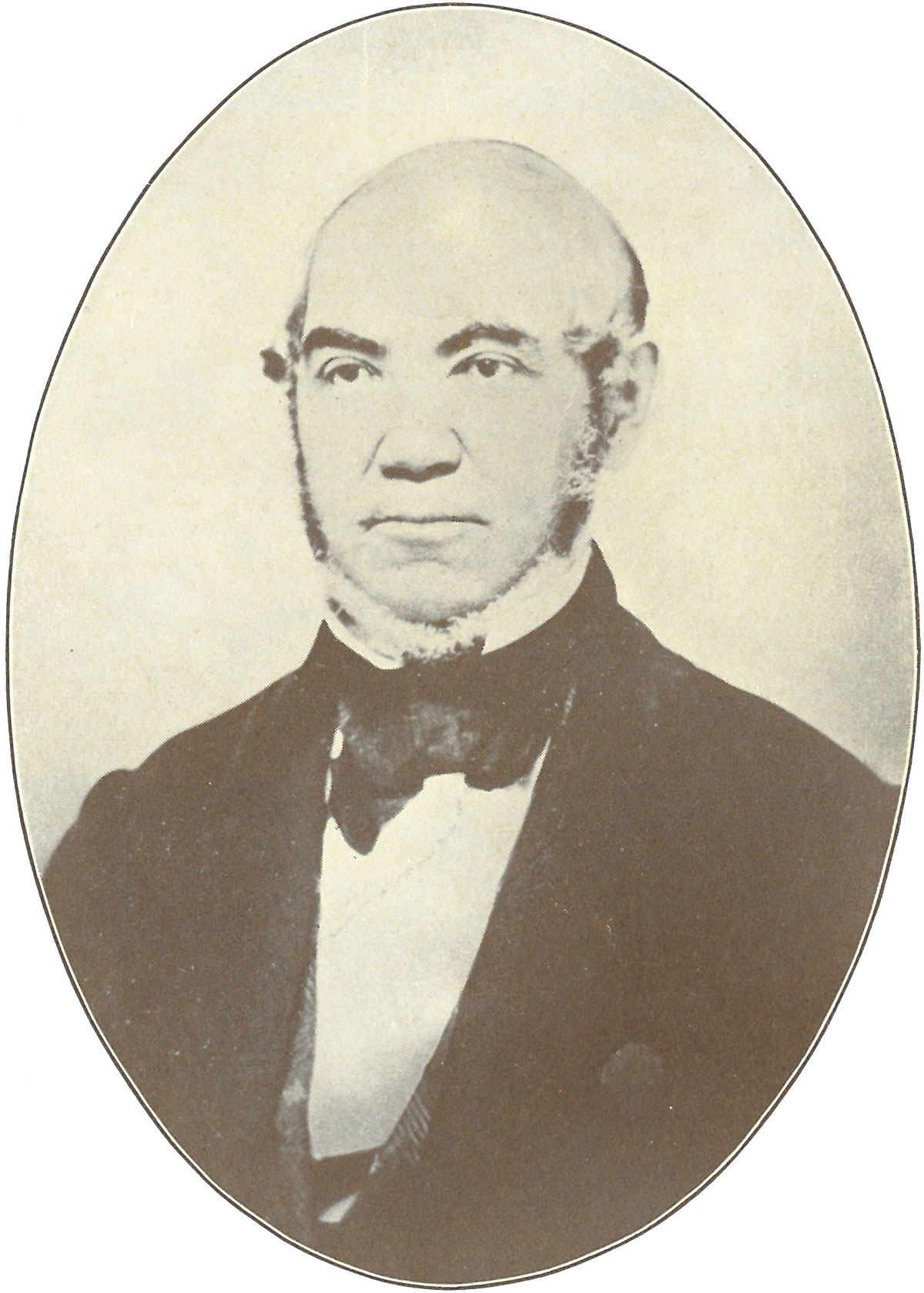
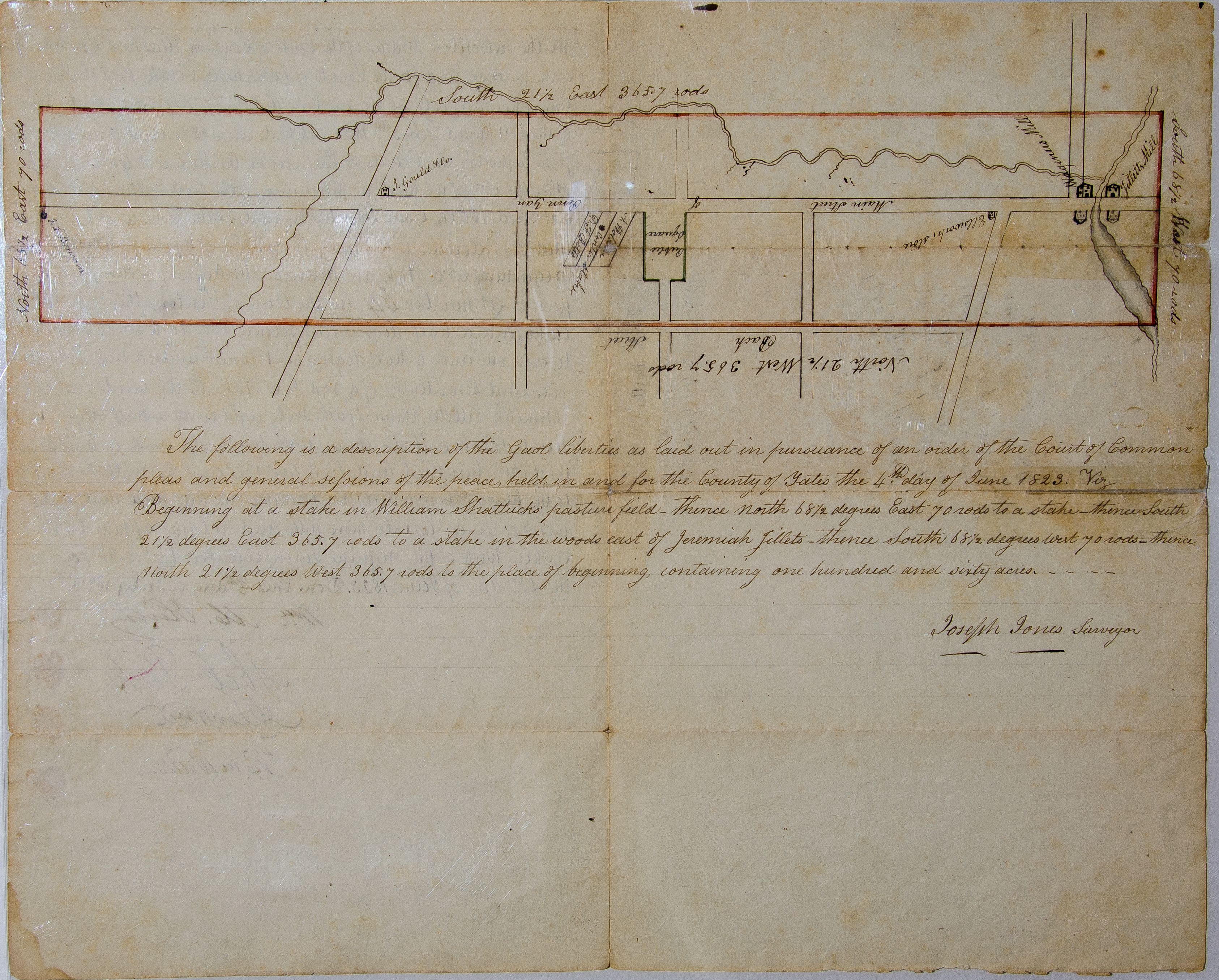
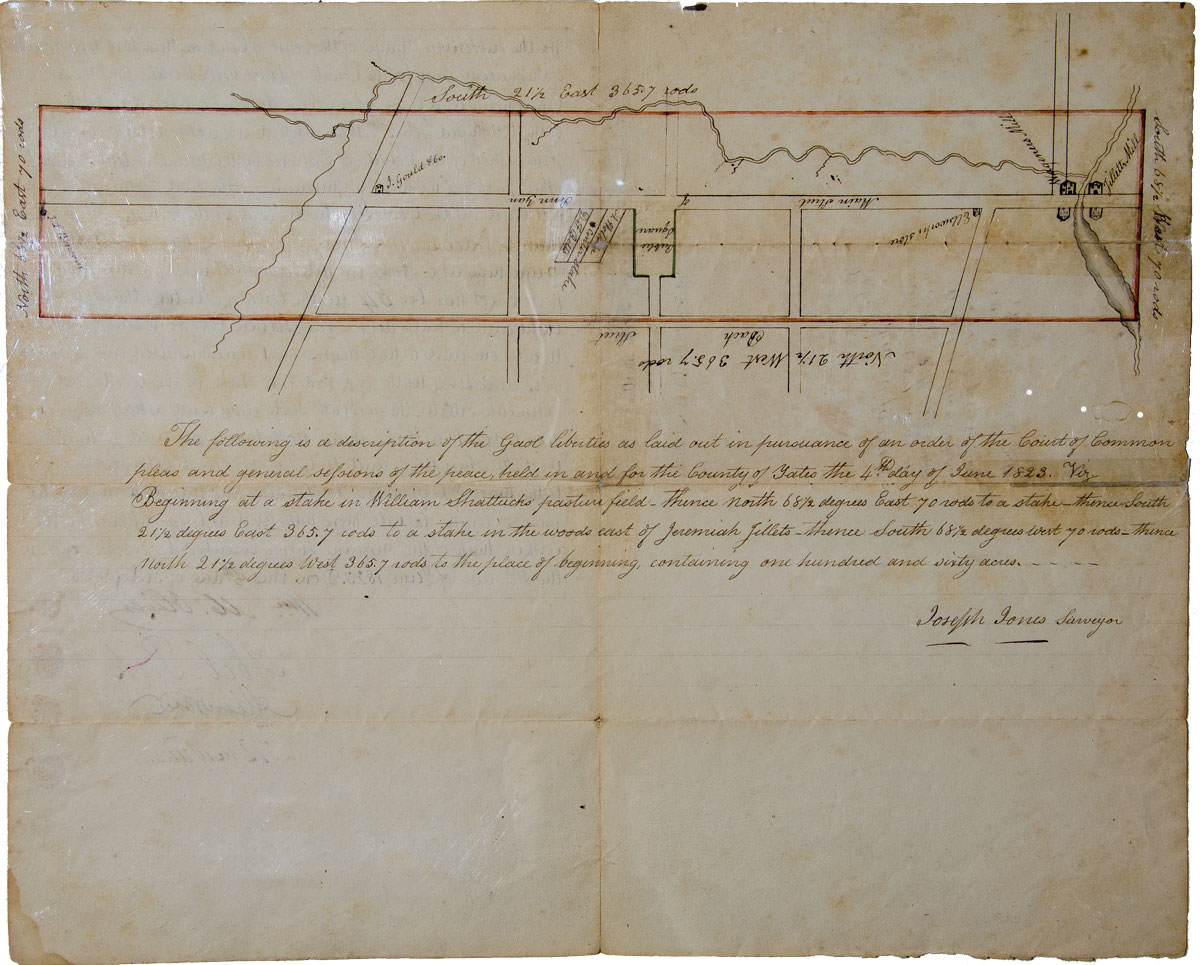
Joseph Jones was born in 1773 to John and Betty (Woodnut) Jones in Warrington, Pennsylvania. A Quaker faith, he opposed slavery and sought to aid freedom seekers. In the 1790s, Jones moved to present-day Yates County with Joshua Way, where Joseph practiced surveying. His name appears in many early deeds, and he drew the first map of Penn Yan, called the Gaol Liberties. His talent as a surveyor and trustworthy led him to be called into settle land disputes. After Yates County was created in 1823, he was one of the county commissioners.
In 1800, Joseph married Elizabeth (Betsy) Riggs of Chester, Pennsylvania and had five children. After Betsy died in 1818, Joseph married Susan Atkinson of Junius, Seneca County and had three more children. There is evidence that after this second marriage he also worked as a hatter.
Jones was strong in his Quaker faith, to the point where was called “Friend Jones” in Yates County. Jones belonged to the Hicksite Quaker sect, which was more progressive in its views than Orthodox Friends, actively fighting slavery and favoring women’s suffrage. This led to his involvement in the Underground Railroad. His residence at 225 Main Street in Penn Yan was possibly a hiding place for freedom seekers. He had connections with abolitionist Isaac Lanning in Lakemont. In 1830, escaped slaves sought by slave catchers in Lakemont were instructed to head to Penn Yan and find Friend Jones.
Jones was also connected to an elaborate web of Quaker-run escape routes in northern Pennsylvania.
Jones died in 1849, while waiting in a stagecoach in Geneva. His son, Richard Mott Jones, joined the Union Army at the outbreak of the Civil War, at the advanced age of 48. According to an anecdote, he dyed his hair to appear younger. Tragically, he died of disease at City Point, Virginia just a month before the war’s end. According to Albert Russell, Richard was “an ardent abolitionist and temperance advocate and won some local fame as an eloquent speaker in behalf of these reforms. He often sheltered fugitive negro slaves attempting to reach Canada and it is believed that his home was a recognized station of the Underground Railroad.” A longtime family friend suggests that Richard’s beliefs and actions were an outgrowth of his family background. “He (Richard) was a son of Joseph Jones, formerly known to our aged citizens as Surveyor Jones. His parents were of that unobtrusive class generally known as Quakers, and it is probably owing to his early training that he was ever an abolitionist.”
| Joseph Jones drew the first map of Penn Yan, called the Gaol Liberties |
 |
| |
|